

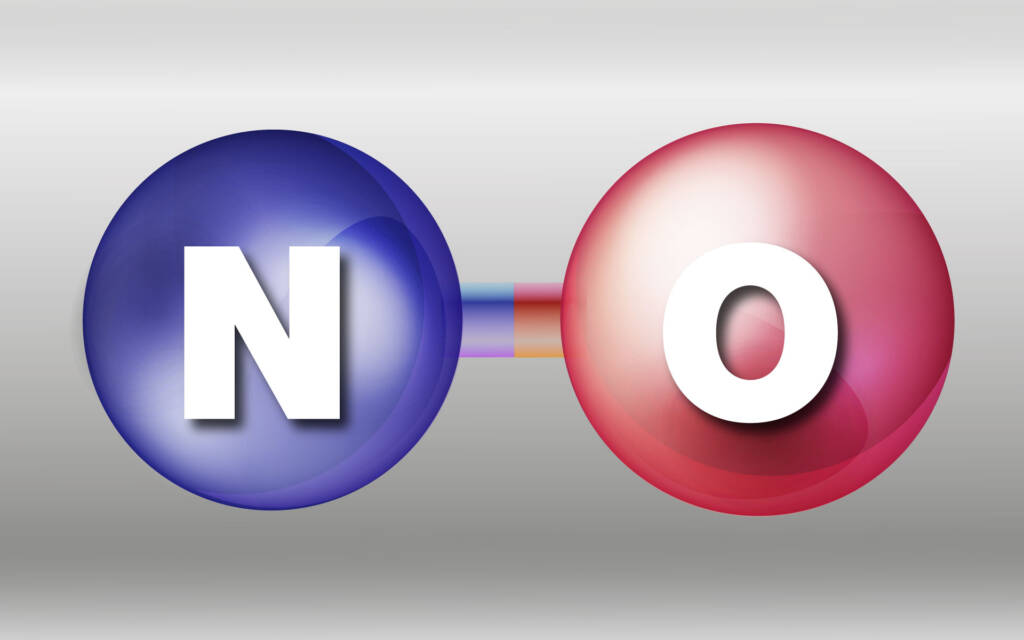
Far infrared rays induce the intracellular generation of nitric oxide.
The 1998 Nobel Prize in Physiology or Medicine was awarded to Robert F. Furchgott, Louis J. Ignarro and Ferid Murad for their discoveries concerning nitric oxide (NO), a signalling molecule in the cardiovascular system that is involved in almost every physiological process and underlies the mechanism of action of Viagra.
Furchgott, a New York pharmacologist, studied the effect of various substances on blood vessels. In 1980 he showed that acetylcholine dilated blood vessels only when the endothelium was intact, and concluded that the vessels dilate because the endothelial cells produce an unknown signalling molecule that makes the smooth muscle cells relax.
Murad, a physician and pharmacologist, studied the vasodilating action of nitroglycerin and its derivatives, and in 1977 discovered that these compounds release nitric oxide, which in turn relaxes smooth muscle cells.
Ignarro, a Los Angeles pharmacologist, helped identify the chemical nature of the substance found by Furchgott, and in 1986 concluded that it was none other than nitric oxide (NO).
Almost unknown until thirty years ago, nitric oxide earned the title of “Molecule of the Year” in 1992, but its countless functions have only been discovered in recent years. It is a gas dissolved in body fluids that crosses the cell membrane to regulate cell function. NO regulates blood pressure, protects the development of the foetus, supports the action of white blood cells in defending the body and promotes erection.
NO is produced through the action of far infrared rays, which resonate with the hydrogen bonds of water molecules and stimulate the synthase; this produces L-arginine, N-hydroxyarginine and in turn L-citrulline and nitric oxide.
Far infrared rays, or FIR, are part of the radiation that reaches us from the sun. They penetrate the skin by four or five centimetres, radiating muscles, blood vessels, lymph glands and nerves. Their wavelength is between 4 and 50 μm, and these biogenetic rays have been shown to promote the healing and growth of living cells in plants, animals and humans.
Toxic gases such as carbon dioxide and sulphur dioxide, or toxic substances such as lead, arsenic, cadmium and mercury, are encapsulated in large groups of water molecules called clusters. FIR is able to break up these clusters, promoting deep detoxification and the production of precious nitric oxide.
What is nitric oxide and how does it work?
NO is a “biological messenger” that plays an important role in various biological processes. It is a biological product found in almost all types of organisms: bacteria, plants, fungi and animal cells.
Nitric oxide is known as the “endothelium-derived relaxing factor”, or “EDRF”. It is biosynthesised endogenously from L-arginine, N-hydroxyarginine and L-citrulline. The endothelium of blood vessels uses nitric oxide to signal the surrounding smooth muscle to relax, resulting in vasodilation and increased blood flow.
Nitric oxide is highly reactive and lasts only a few seconds, but it diffuses freely across cell membranes. These characteristics make it ideal as a transient signalling molecule between adjacent cells and within a single cell. In the many studies carried out over the last twenty years it has received great attention thanks to its numerous benefits for cardiovascular health.
The endothelium, the inner surface of the arteries, produces nitric oxide. This tiny gas molecule dissolves in the fluids inside and around the cells and, having an unpaired electron, reacts very easily with other molecules: in other words, it behaves like a free radical. The build-up of plaque in the arteries (atherosclerosis) reduces the ability to produce nitric oxide, and through exposure to FIR we can activate nitric oxide production naturally, without taking drugs.
For a general overview you can read the Wikipedia article on nitric oxide.


